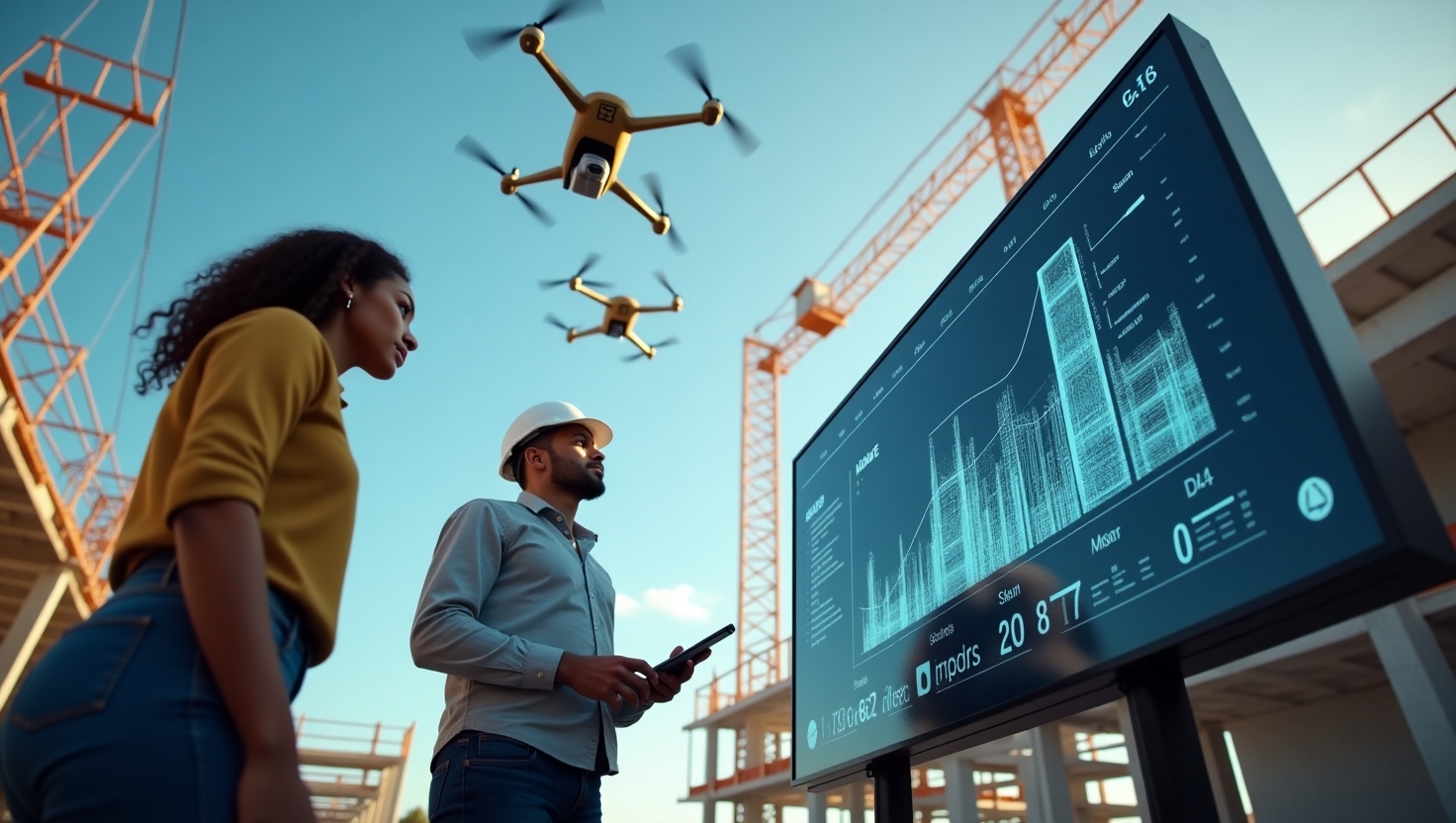
The Rise of AI in Construction: Transforming the Industry
Introduction
Artificial intelligence is no longer just a buzzword—it’s a formidable force barreling through industries, reshaping their very essence. Among these sectors, AI in construction stands as a revolutionary catalyst poised to redefine paradigms. As the construction industry lumbers forward, the infusion of AI is set to modernize workflows, optimize operations, and eradicate inefficiencies. In this whirlwind of transformation, the Dodge Construction Network emerges as both witness and participant in this technological evolution. Yet amid this progress, we raise the question: are we ready for the seismic shift that automation in construction promises?
Background
The construction industry’s embrace of technology has historically been tepid at best. While cranes and scaffolding have been indispensable tools, digital solutions have largely lingered in the realm of novelty. However, as industries pivot towards digital transformation, construction industry AI is gaining unprecedented attention. The Dodge Construction Network, a pivotal consortium providing insights and analytics, has been instrumental in showcasing how tech-savvy edifices can transcend traditional limitations.
Historically, AI’s role in construction was minimal, limited to experimental gadgets rather than an integral part of operations. For many, construction begins with a blueprint and ends with brick and mortar. It’s time to challenge that notion. Imagine a world where AI-generated designs anticipate structural integrity failures before a single brick is laid—a shift from reactive to proactive construction.
Trend
Emerging trends depict a burgeoning shift where technology architects a new future for construction. The implementation of AI in construction is striking—a testament to its transformative potential. Reports from Artificial Intelligence News reveal that contractors give AI applications a 92% effectiveness rating for tasks like proposal generation and progress tracking. An eye-opening 87% of contractors vouch for AI’s potential to transcend traditional business boundaries.
Yet, amidst these promising trends, one cannot ignore the elephant in the room—automation in construction. With anticipation, contractors predict a future where AI automates menial tasks, effectively reducing labor dependency and amplifying precision.
Insight
The digital frontier beckons, yet not without its dragons. AI in construction introduces a paradox—while it promises predictive insights and increased efficiency, concerns over accuracy and data security loom large. Industry leaders, including entities like CMiC and voices like Gord Rawlins, underscore that getting past these concerns is essential to reaping AI’s benefits. Artificial Intelligence News highlights a staggering 85% of contractors eyeing a future with less repetitive drudgery—if AI solutions can assure safety and reliability.
Consider AI’s predictive prowess as akin to a seasoned chess player anticipating an opponent’s move. Unlike fleeting human intuitions, AI’s insights are backed by data, a staggering benefit when making split-second decisions that affect millions in construction capital.
Forecast
Fast forward a decade—AI in construction is not just an accessory but the nucleus of operations. Predictions suggest an industry mirroring science fiction, where excavators operate autonomously and drones replace surveyors. As reliance on AI intensifies, the industry faces the inevitable shift from manual processes to fully automated systems.
In the next 5 to 10 years, we expect a quantum leap in AI adoption across the construction spectrum. Imagine high-rises conceived in the digital domain, molded in virtual reality, and constructed with robotic precision—a revolution that shouts goodbye to outdated methodologies. The role of automation in construction grows, igniting debates about employment and ethical AI use.
Call to Action
As the construction cosmos hurtles into a new era, the question is not if, but how, we will ride this tech tidal wave. It’s imperative to dig deeper into understanding these advancements—stay informed, adapt to the tide, and embrace partnerships with AI mavens who can sharpen the competitive edge.
This embrace of technology is not just strategic; it’s survival. Will your business be a reluctant participant in the AI revolution—or will you seize the opportunity to build the future today?
For further insights on AI-enabled construction advancements, delve into the Artificial Intelligence News.
Don’t just build; transform.